


AI Innovation Awards · AWD-012

AI Mission Advancement

AI directly advancing an organization's stated mission.

What this award recognizes

The criteria

The mission outcome is primary and must be distinguished from operating savings alone.

  1. What changed in the mission result?35 points
  2. Did AI address a central mission need?25 points
  3. Is the contribution believable and checkable?20 points
  4. Can the benefit continue and reach the intended people?10 points
  5. Did the work respect the people and responsibilities involved?10 points
What to explain in your nomination

What changed in the mission result?

Show a supported improvement in the outcome your organization exists to achieve. Program records and suitable feedback or verification can help explain the difference.

Did AI address a central mission need?

Share the stated mission and a simple explanation of how the AI-supported work connects to it. Describe why that part of the program matters.

Is the contribution believable and checkable?

Explain the starting point or fair comparison, how results were measured, other changes that may have helped, and the limits of what you can attribute to the intervention.

Can the benefit continue and reach the intended people?

Show relevant reach, program use, follow-up, resources, and plans for keeping the work going.

Did the work respect the people and responsibilities involved?

Describe human oversight, stakeholder feedback, appropriate information handling, and how mistakes are corrected.

These five criteria total 100 points. The awards rules explain eligibility, evidence, review and selection. One principal achievement belongs in one category.

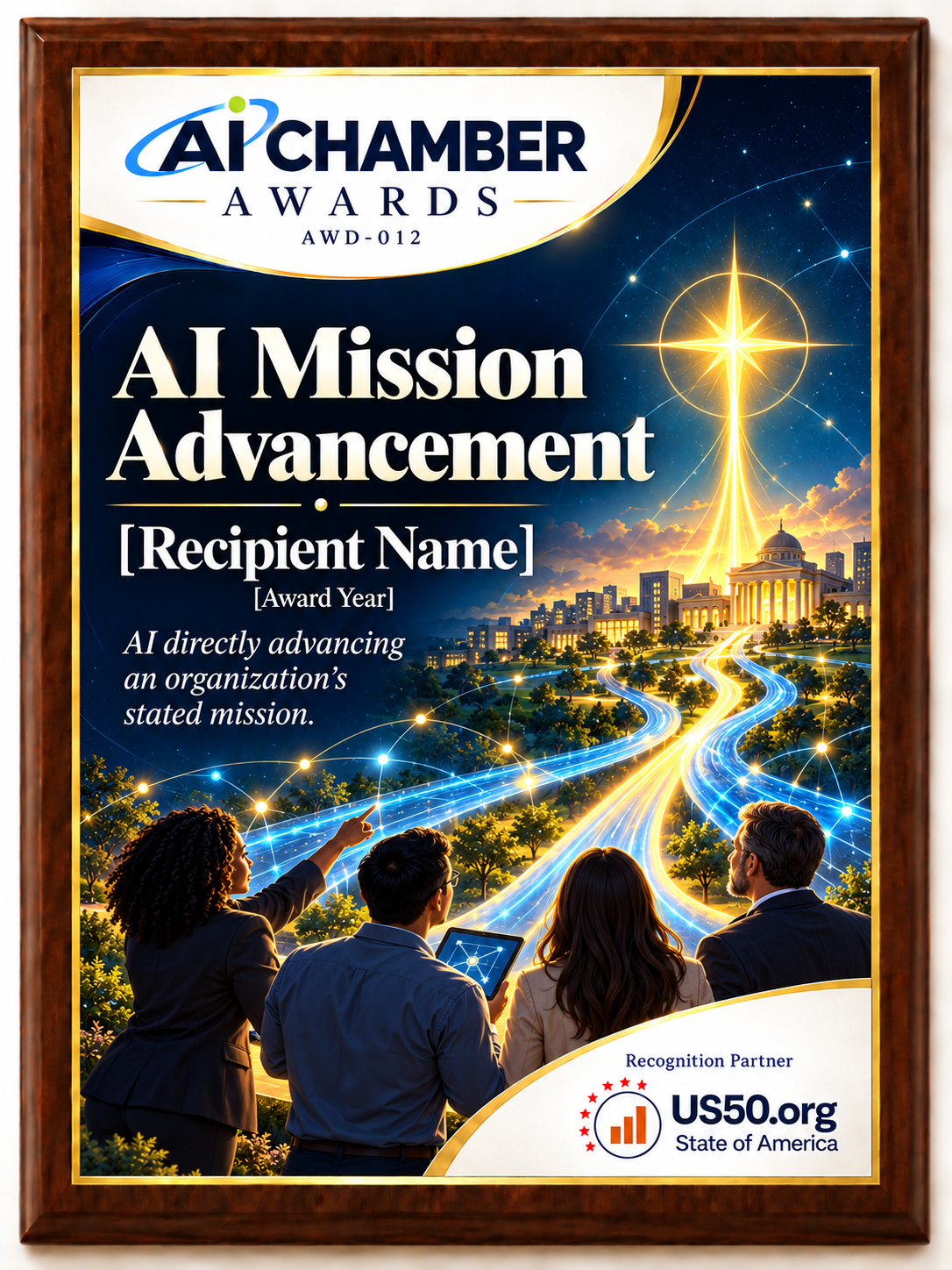
AI Mission Advancement award plaque design with recipient and year placeholders
AI Mission AdvancementPlaque design · Recipient and year placeholdersView full-size design ↗

Latest recipient · June 2026 recognition

The Vesuvius Challenge research collaboration

For returning previously inaccessible ancient writing to human knowledge while preserving a fragile historical object.

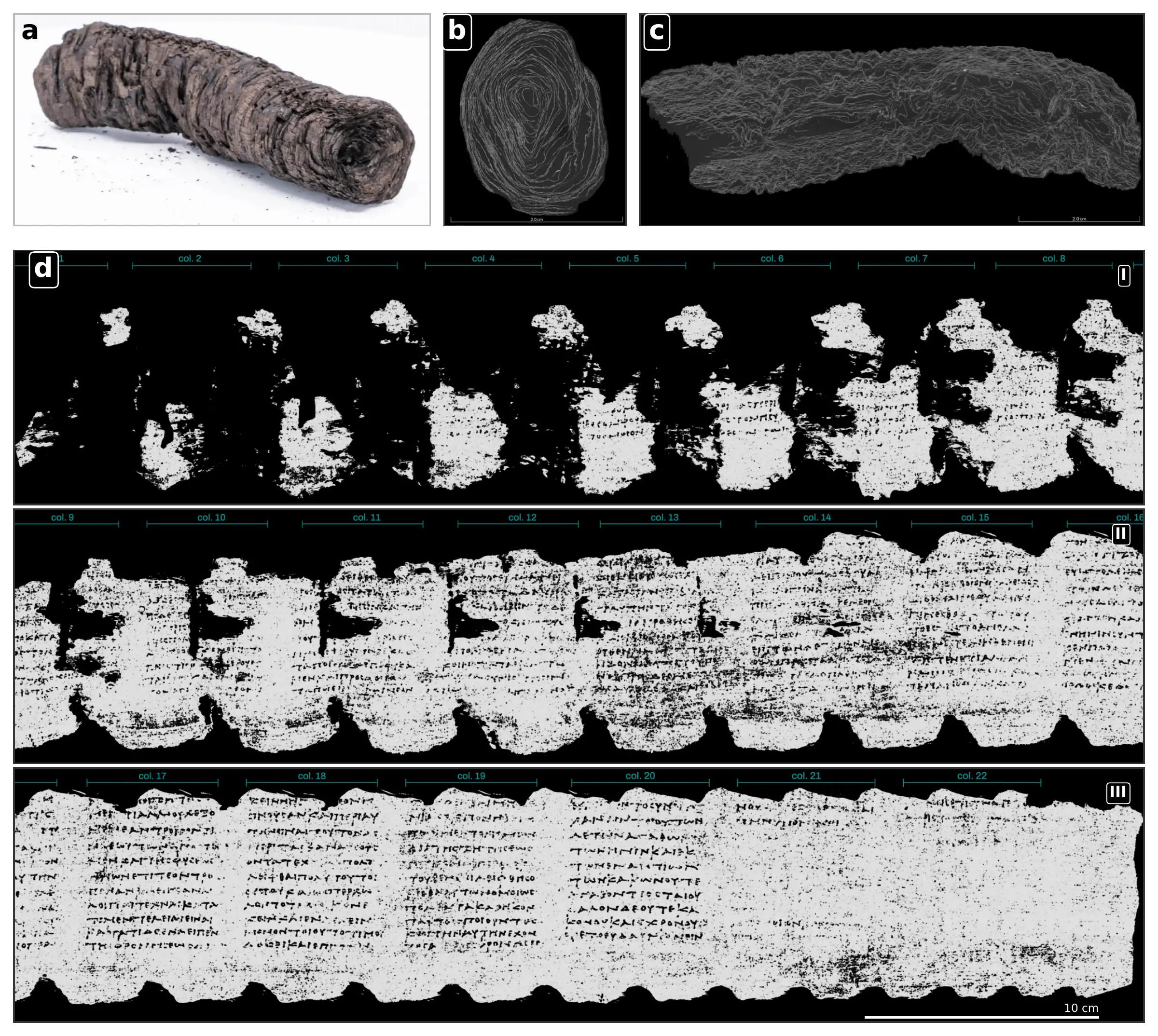
PHerc. 1667: the carbonized roll, scan cross-sections and recovered writing, as published by the Vesuvius Challenge.
PHerc. 1667: the carbonized roll, scan cross-sections and recovered writing, as published by the Vesuvius Challenge. Image source: Vesuvius Challenge, 2026 ↗

Why the Chamber selected this recipient

Recovering knowledge without destroying its home.

The Chamber selected the Vesuvius Challenge research collaboration for making previously inaccessible ancient writing available for scholarly reading. The June 25, 2026 announcement described the virtual unwrapping of PHerc. 1667: a surviving Herculaneum scroll too fragile to open physically.

The team scanned the carbonized roll with high-resolution X-rays, reconstructed and digitally flattened its wound surface, then used machine learning to reveal traces of ink. The surviving text extended across roughly twenty-two columns of Greek. The recognition credits the wider collaboration, including the University of Kentucky’s EduceLab, ESRF imaging specialists, papyrologists and the National Library of Naples. Their combined work made the recovered writing available for scholarly reading.

AI Mission Advancement asks whether the work moves an organization or collaboration toward its underlying purpose. Here the outcome is recovered human knowledge, not simply faster administration or a more efficient research office. The method serves the mission by enabling access while respecting the fragility of the historical object.

For museums, archives, universities and mission-driven organizations, this is a useful standard. Explain what your mission makes important, then show how AI helped achieve that purpose. A strong nomination follows the line from the method to the mission outcome rather than assuming that any use of advanced technology must be valuable.

The complete reading concerns the portion of PHerc. 1667 that survives. It does not restore outer layers destroyed in earlier attempts to open the roll, or establish that every sealed scroll can now be recovered. Those limits do not diminish the central achievement. The collaboration opened a carefully documented route back to writing that had remained beyond reach, and that is why it is the founding recipient of AI Mission Advancement.

Sources and recognition record

June 2026 founding recognition. Published 2026-10-28. The Chamber selected this achievement through editorial review of published sources. This was separate from paid nominations and public-support votes. Inclusion does not claim recipient acceptance, membership or endorsement.

Original country-linked story and research record →

The next chapter · July–December 2026

Who will be the next recipient of AI Mission Advancement?

Put a worthwhile achievement forward. Tell us the problem, how AI helped, what changed and who made it possible.

AI Mission Advancement

Nominate for AI Mission Advancement →

Apply by December 31, 2026, at 11:59 p.m. U.S. Central Time. $150 USD per paid nomination, including 12 months of Individual membership. Payment does not determine selection.

The form accepts one PDF or Word document and up to three photos. Read the awards rules, benefits and refund policy →

← Explore all 15 awards