
AI Innovation Awards · AWD-013

AI Funding or Resource Innovation

AI improving funding decisions or resource allocation.

What this award recognizes

The criteria

Funding or allocation decisions are primary, rather than general operational efficiency.

  1. Were decisions better aligned with the need and purpose?35 points
  2. What useful benefit followed?20 points
  3. What did AI improve in the actual review process?20 points
  4. Can people explain, check, and correct the decisions?15 points
  5. Are the resources and information being managed carefully?10 points
What to explain in your nomination

Were decisions better aligned with the need and purpose?

Explain the criteria and show how allocations served the intended objective. Use comparisons, outcome checks, or appropriate review to support the claim.

What useful benefit followed?

Show resources being deployed to priority needs and the supported program or organizational benefit that resulted.

What did AI improve in the actual review process?

Describe the starting workflow, AI assistance, workload, and other process changes. Make clear which improvement came from which part of the work.

Can people explain, check, and correct the decisions?

Share criteria, human review and approval, responsible roles, explanations, escalation, and how conflicts are handled.

Are the resources and information being managed carefully?

Describe data quality checks, monitoring, continuity, and practical limits on how AI is used in the process.

These five criteria total 100 points. The awards rules explain eligibility, evidence, review and selection. One principal achievement belongs in one category.

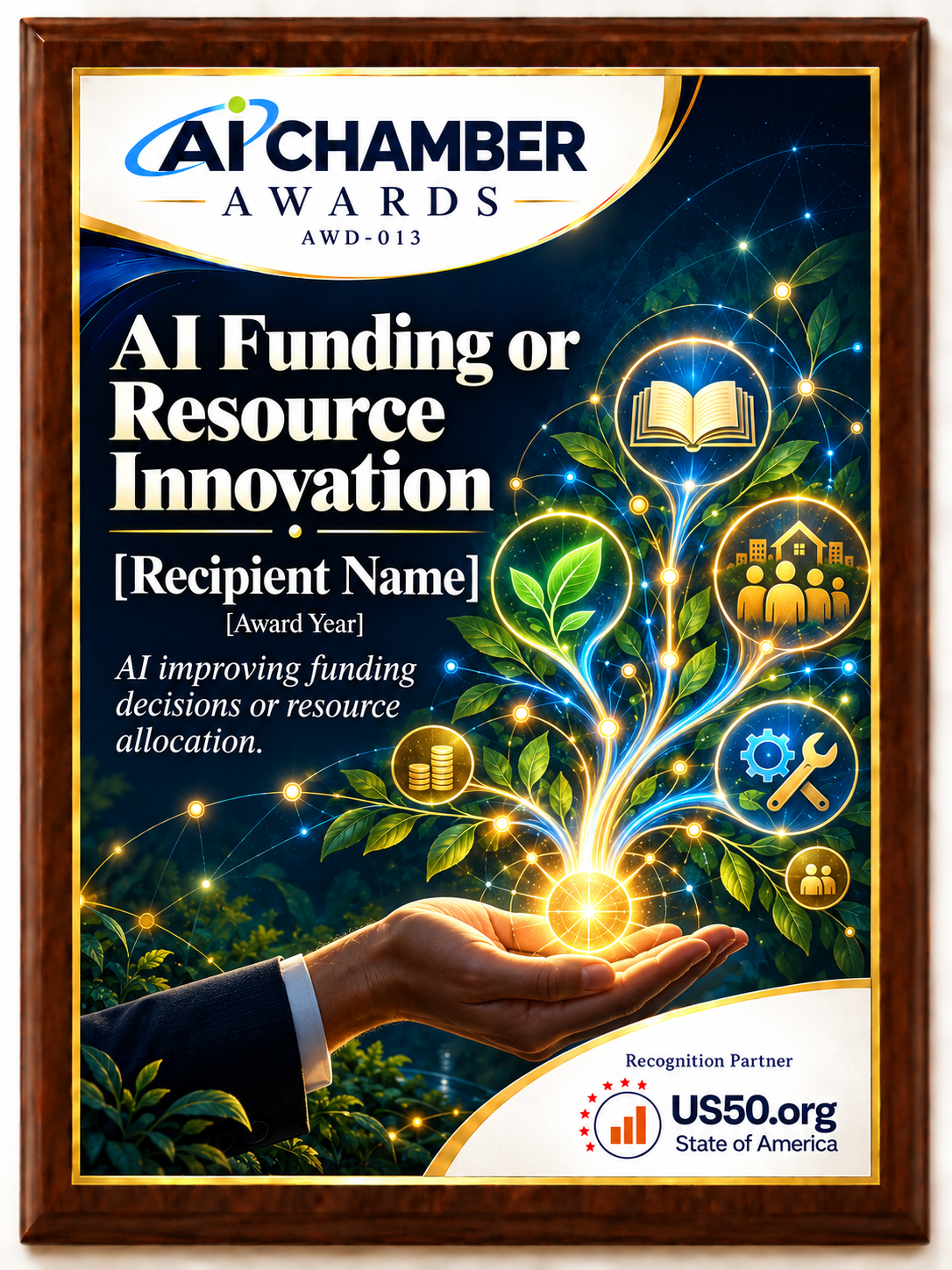
AI Funding or Resource Innovation award plaque design with recipient and year placeholders
AI Funding or Resource InnovationPlaque design · Recipient and year placeholdersView full-size design ↗

Latest recipient · June 2026 recognition

GiveDirectly’s MobileAid team and Malawi implementation partners

For combining AI-supported targeting and in-person enrollment to improve the allocation of emergency assistance.

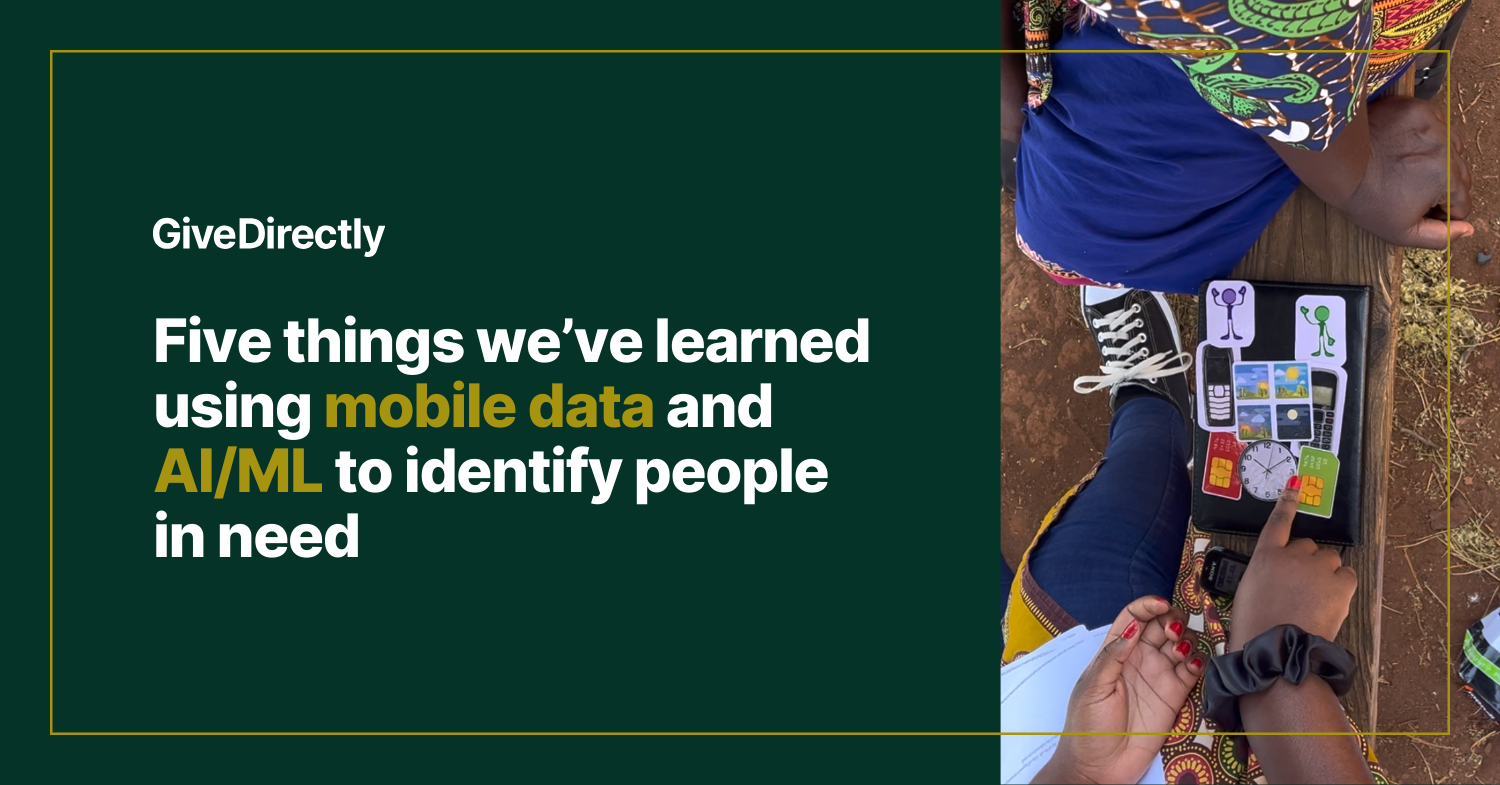
MobileAid project image from GiveDirectly’s implementation account.
MobileAid project image from GiveDirectly’s implementation account. Image source: GiveDirectly ↗

Why the Chamber selected this recipient

Putting limited assistance within reach of the people who need it.

The Chamber selected GiveDirectly’s MobileAid team and Malawi implementation partners for improving how limited assistance can be directed. The achievement concerns the allocation process: identifying people in need and enrolling them for support using a combination of phone-data analysis and in-person work.

GiveDirectly’s September 2025 account reports that its Malawi hybrid enrolled 35% of recipients through phone metadata and 65% in person. Compared with an entirely in-person operation, it reported halving the cost of identifying and enrolling each additional person. The in-person route remains an important part of this story.

AI Funding or Resource Innovation includes more than raising money. It also concerns better decisions about where resources go and how a limited budget can serve its purpose. The Chamber recognizes the choice to combine methods, rather than assuming a digital-only system is automatically the best answer.

J-PAL’s account offers a further view of the Malawi adaptation: a 2025 Mzuzu pilot reaching 12,800 low-income households, with delivery timelines reduced from nine months to three and a half months and operational costs reduced by 40%. These are separate measures from GiveDirectly’s incremental enrollment-cost comparison. Together, the accounts help explain why the Chamber sees a resource-allocation achievement: a defined decision process with practical consequences for reaching people.

The reported saving is an incremental enrollment-cost comparison, not a claim that the entire program budget fell by half. Phone-based targeting is not always more accurate than detailed household surveys, and privacy, exclusion and setup costs remain important. The Chamber’s recognition celebrates a practical allocation approach while preserving those tradeoffs. The strength of the achievement is not a claim of a perfect algorithm; it is a more thoughtful way to combine data, human contact and scarce assistance.

Sources and recognition record

June 2026 founding recognition. Published 2026-10-28. The Chamber selected this achievement through editorial review of published sources. This was separate from paid nominations and public-support votes. Inclusion does not claim recipient acceptance, membership or endorsement.

Original country-linked story and research record →

The next chapter · July–December 2026

Who will be the next recipient of AI Funding or Resource Innovation?

Put a worthwhile achievement forward. Tell us the problem, how AI helped, what changed and who made it possible.

AI Funding or Resource Innovation

Nominate for AI Funding or Resource Innovation →

Apply by December 31, 2026, at 11:59 p.m. U.S. Central Time. $150 USD per paid nomination, including 12 months of Individual membership. Payment does not determine selection.

The form accepts one PDF or Word document and up to three photos. Read the awards rules, benefits and refund policy →

← Explore all 15 awards