
 India
Why the Chamber selected this recipient
Your language can be a contribution—and a source of income.
Leadership acknowledged: Co-founders Manu Chopra, Safiya Husain and Vivek Seshadri, alongside Karya’s worker-opportunity team, community delivery partners and participating workers.
Who gets to earn when AI grows? Karya’s story begins with that question. The AI Chamber recognizes its worker-opportunity team for opening a paid pathway into the AI economy for people whose languages and experiences are valuable to the technology. The achievement is participation through real work, connecting a growing demand for data with people who can contribute it.
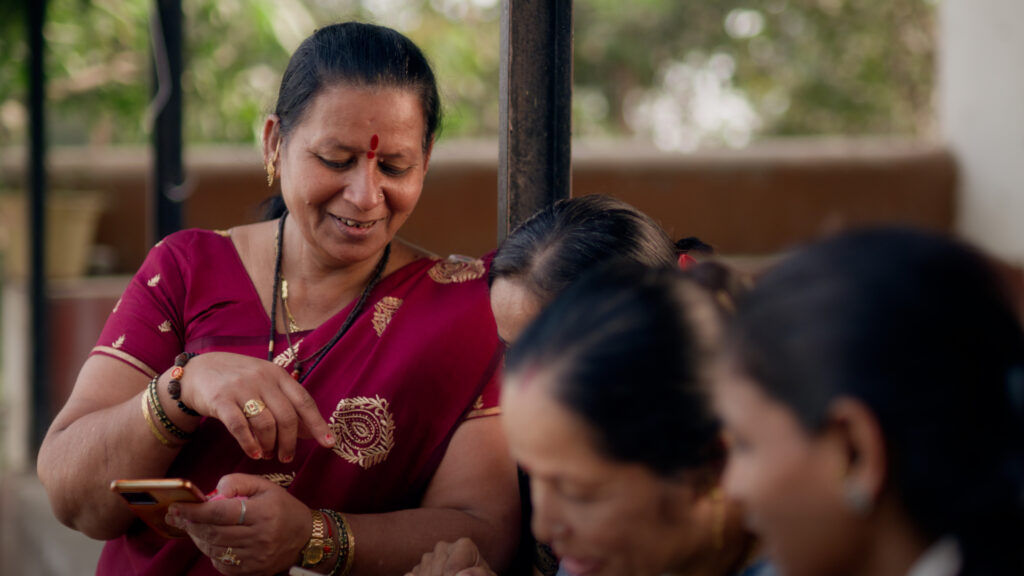
The historical evidence includes a concrete account published by Microsoft on February 7, 2024. Baby Rajaram Bokale recorded Marathi material through Karya’s app. The report describes about five hours of work across eleven days, earning 2,000 rupees—approximately US$25 at the time. She said the earnings helped repair equipment in her spice-grinding business. It is a small, specific example of money reaching a worker and supporting an existing livelihood.
The conditions matter as much as the payment. TIME’s July 2023 field reporting described local recruitment, paid language-data tasks and a shortage of available work. It made clear that this was supplementary income, not a permanent job. That distinction belongs in the recognition: a paid opportunity can be useful without becoming a promise of continuous employment or a proven route out of poverty for every participant.
The people behind the pathway deserve to be named. Karya’s published team page identifies Manu Chopra, Safiya Husain and Vivek Seshadri as co-founders. The Chamber also acknowledges community delivery partners and participating workers. A system that depends on people’s voices and knowledge should make those contributions visible, alongside the organizational leadership that brings the work within reach.
Additional context comes from Karya’s 2025 annual report, reviewed in October 2026. It reports more than US$3.2 million in cumulative worker wages and 134,565 onboarded workers as of January 2026. Those measures describe different things: cumulative payments are not one year’s wages, and onboarding is not proof that everyone received work or a permanent job. The report’s first publication date was not independently established, so these larger figures are context rather than the basis for the June 2026 historical selection.
For employers, funders and business leaders, the lesson is practical. Creating opportunity means examining who can obtain paid work, what participation costs them, whether payment arrives and how the pathway can become more dependable. The Chamber has not audited Karya’s payroll or typical annual earnings. It recognizes a documented effort to connect AI’s demand for human contributions with paid participation—and a question every growing industry should keep asking: who shares in the opportunity?
Sources and recognition record
- Microsoft Source Asia — paid work, participant hours and earnings, February 7, 2024 ↗
- TIME — independent field reporting and limits of supplementary work, July 27, 2023 ↗
- Karya — co-founder identities and team credits; current page ↗
- Karya 2025 annual report — supplementary context; original publication date not independently established ↗
June 2026 founding recognition. Published 2026-10-29. The Chamber selected this achievement through editorial review of published sources. This was separate from paid nominations and public-support votes. Inclusion does not claim recipient acceptance, membership or endorsement.